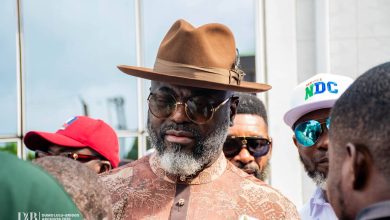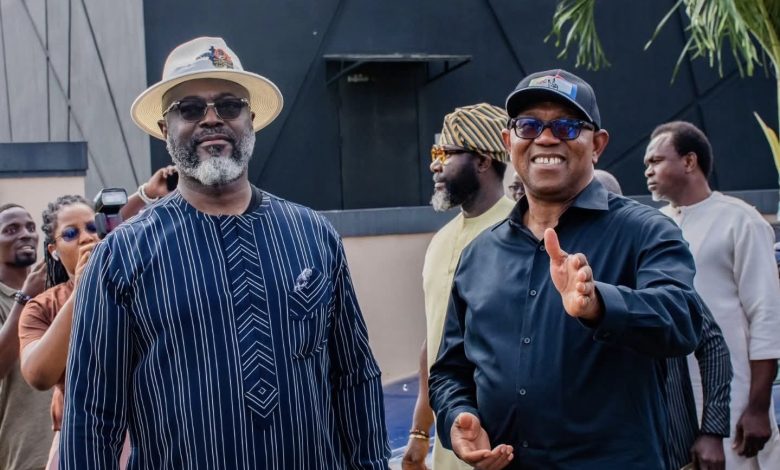
The National Democratic Congress (NDC) governorship candidate in Rivers State, Dumo Lulu-Briggs, has declared that his 2027 ambition is driven by a determination to change the way the state is governed and harness its vast resources to create jobs, strengthen businesses and deliver better public services.
Lulu-Briggs, in a statement titled “Why I Am Running,” said his decision to seek the governorship was informed by what he described as a responsibility to help build a more prosperous, peaceful and inclusive Rivers State.
He said the state had immense human and economic assets capable of supporting sustainable prosperity, but argued that political distractions and prolonged conflicts had often shifted attention away from the everyday needs of residents.
According to him, issues such as employment, healthcare, education, infrastructure, security and opportunities for businesses should occupy the centre of political discourse, rather than disputes that have little impact on improving the lives of citizens.
Lulu-Briggs argued that political instability carries a significant social and economic cost, noting that uncertainty can delay public decisions, stall development projects, discourage investment and weaken confidence in government.
He said his vision was to build a political environment in which disagreements could be resolved through dialogue and institutions, rather than confrontation, stressing that Rivers State should not be held hostage by political divisions or the interests of a few individuals.
“Rivers State belongs to the people,” he said, maintaining that political power should be viewed as a responsibility to citizens and not as a tool for personal influence or permanent political control.
The NDC candidate identified the state’s oil and gas resources, ports and waterways, agricultural potential, tourism assets, creative industries and the commercial capacity of Port Harcourt as key drivers that could support a broader and more resilient economy.
He said the objective should be to move beyond simply possessing these resources to creating the infrastructure, institutions and investment environment required to turn them into industries, businesses, jobs and improved public services.
Lulu-Briggs described this approach as his “Reset Rivers State” vision, which he said would be anchored on six broad priorities: peaceful and purposeful politics, competent and accountable institutions, economic diversification, merit-based access to opportunities, restoration of public trust and stronger environmental protection.
On economic growth, he set out an ambitious long-term target of helping Rivers State grow from an estimated $20 billion economy into a $200 billion economy within 15 years.
He acknowledged that such a transformation would require sustained investment in power, transportation and logistics, industrial infrastructure, agriculture, fisheries, tourism, skills development, small and medium-sized businesses, the creative economy and the blue economy.
Employment, he said, would be another major measure of the success of his proposed administration. He expressed the need for a system where young people can translate education and skills into productive careers, while entrepreneurs can obtain access to finance, markets and infrastructure without depending on political patronage.
Lulu-Briggs also pledged greater attention to the environmental challenges confronting communities across Rivers State. He identified pollution, flooding, coastal erosion, unsafe water and inadequate drainage as issues requiring stronger government intervention and more effective monitoring.
He maintained that development should not come at the expense of the environment, arguing that genuine economic transformation must also protect the natural resources and communities upon which livelihoods depend.
The governorship candidate stressed that his proposed Reset should not be interpreted as an agenda of political retaliation. Rather, he described it as an effort to establish a governance culture built around competence, continuity, transparency, accountability and measurable outcomes.
He said citizens should not be expected to support government based solely on promises, adding that an administration should be judged by evidence of progress and its ability to communicate honestly about what it has achieved, where it has fallen short and what needs to be corrected.
Among the areas he identified for measuring performance were improved political stability, stronger public institutions, progress on infrastructure projects, a better business environment, increased employment, expansion of tourism and the creative sector, improved environmental management and greater transparency in governance.
Lulu-Briggs consequently urged Rivers people to approach the 2027 election as an opportunity to determine the kind of leadership and governance they want for the state.
He called for a political culture that prioritises competence over conflict, productivity over rhetoric, opportunity over patronage and prosperity over poverty.
“Rivers State belongs to the people. It needs a Reset,” he declared, expressing his determination to build a state where communities and citizens can have confidence that government exists to serve, protect and create opportunities for them.